FAssets v1.3 is live: direct FXRP minting fits the rails XRP already uses

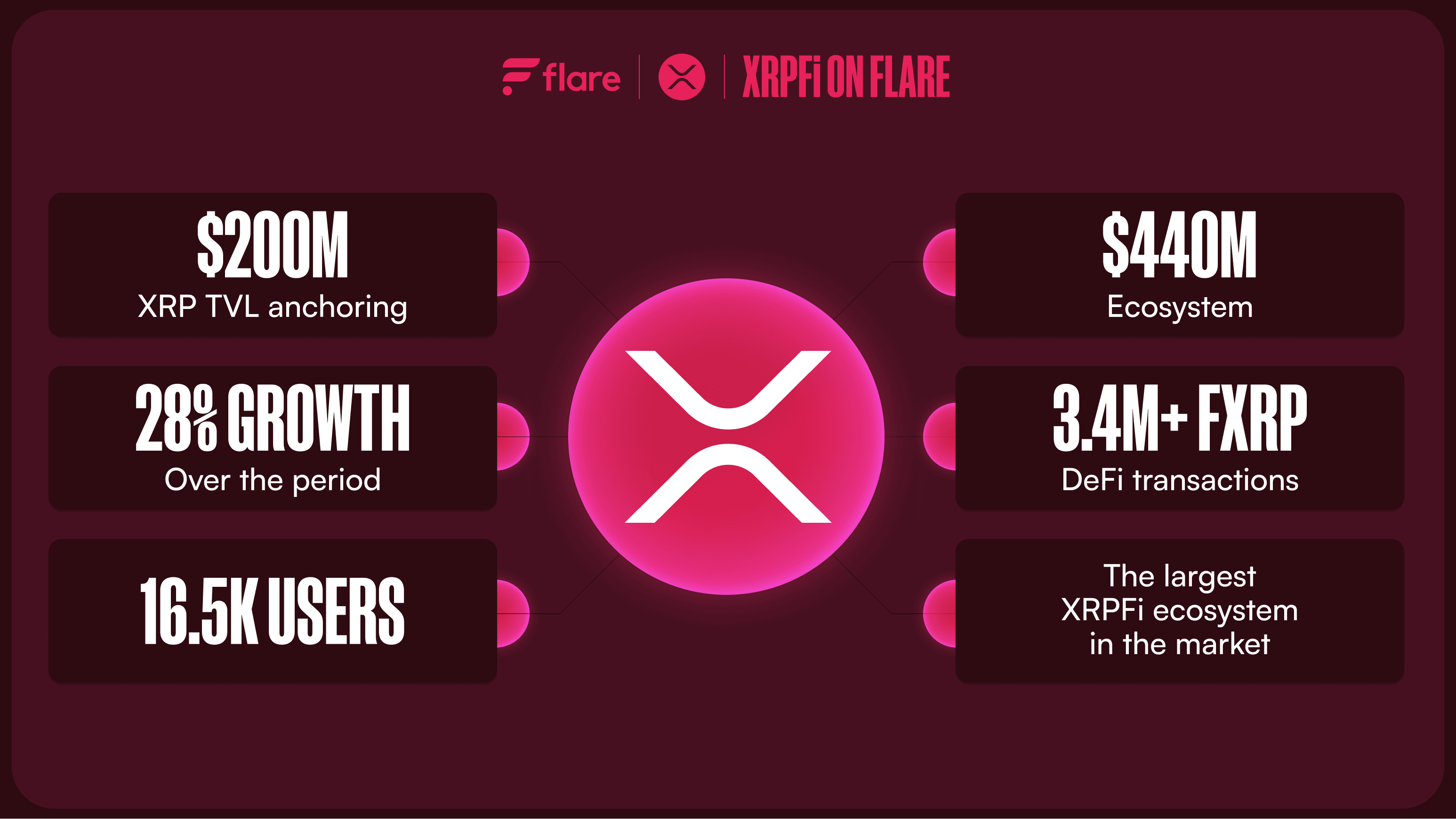
FXRP has been mintable on Flare for months, with more than 155 million FXRP minted to date. v1.3 aligns the minting path with how XRP already moves: destination tags, known addresses, wallets, custodians, exchange withdrawals.
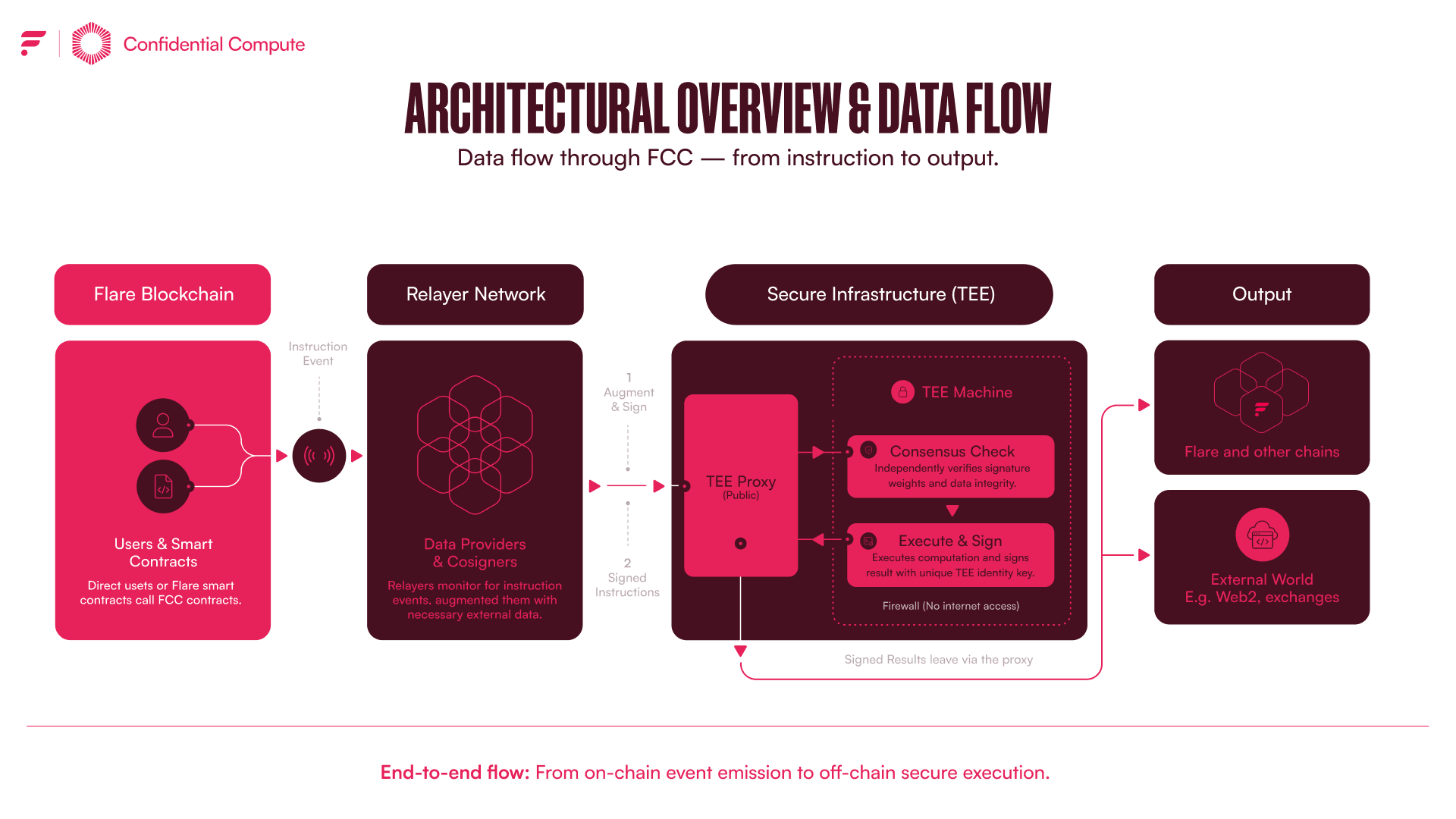
With FAssets v1.3, users no longer need to pick or coordinate with an individual agent. They send an XRP transaction on XRPL, and the FAssets system routes the resulting FXRP based on a destination tag, a memo, or a Flare Smart Account.
This sits between v1.2 and v2. It pulls forward part of the v2 minting model — direct minting, tag-based routing, and tighter Flare Smart Account integration — while leaving the redemption-side collateral model in place.
What scales XRPFi from here is distribution: reaching XRP holders through the surfaces they already trust. v1.3 is built for that, and it is live on mainnet now, following its earlier deployment on Songbird as Flare's canary network.
How minting changes
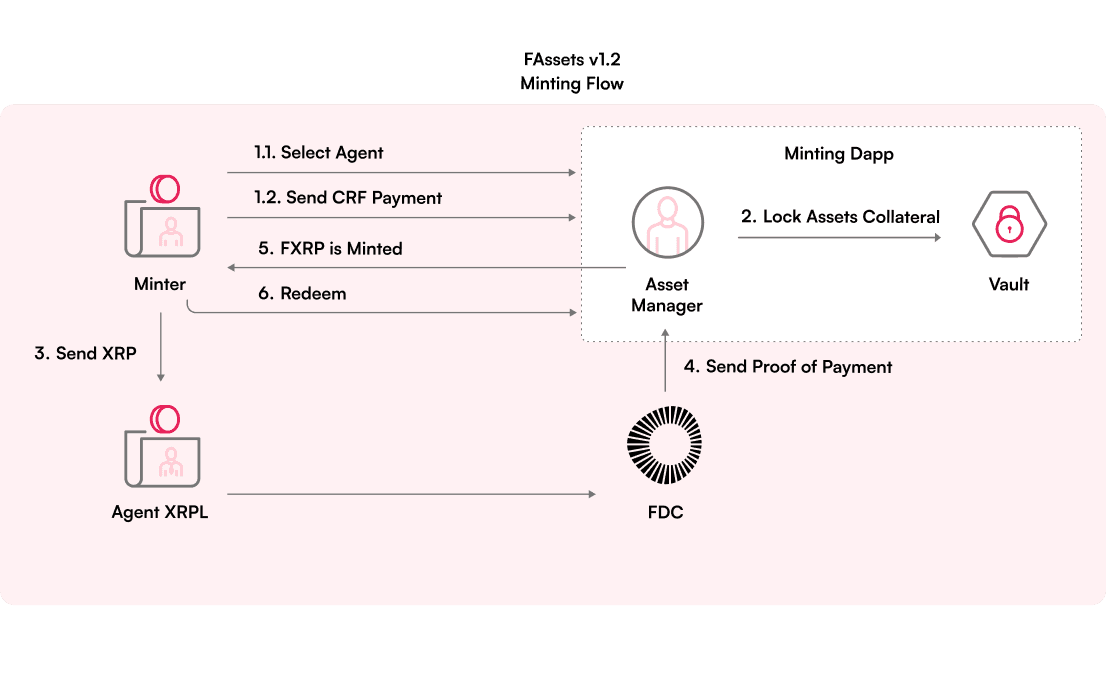
In earlier versions, minting FXRP meant selecting a specific agent and minting against that agent's available collateral. Capacity was gated by which agents had collateral available for minting.
In v1.3, a user initiates minting by sending a properly labelled XRP transaction on XRPL to the FAssets system address. An executor relays the proof of that payment to Flare, where the mint completes. There is no agent on the mint side anymore.
Five important improvements follow:
- Simpler user flow: users no longer need to select an agent or complete a separate collateral reservation step before minting FXRP.
- Easier integration: direct minting removes the separate collateral reservation transaction, reducing integration complexity and avoiding reservation-related minting timeouts.
- Better exchange and custodian compatibility: destination tags and memo-based routing align with infrastructure that already exists across the XRP ecosystem.
- Flexible mint amount: direct minting removes fixed-lot constraints, while minimum fees mean very small mints may still be uneconomical.
- More scalable minting: minting is no longer constrained by individual agent availability on the way in, while explicit controls govern how quickly volume can grow.
This does not remove agents from FAssets. Agents remain essential on redemption, where the collateralized model continues to operate. Overcollateralization, collateral-ratio monitoring, FDC challenge proofs, graduated liquidation, and redemption-side mechanics remain in place.
In plain terms: v1.3 simplifies how XRP enters the system as FXRP, while preserving the redemption-side safeguards FAssets already uses.
Destination tags
Tag-based routing is the most consequential piece of v1.3 for distribution.
Destination tags are how XRP withdrawals from exchanges already work, how custodians already credit accounts, and how every XRPL wallet already labels deposits.
A tag can be reserved on Flare and mapped to a Flare address. After that, an XRP transaction with that tag mints FXRP straight to the mapped address, no agent selection required.
XRPFi will not scale only on the back of new DeFi apps. It scales when the routing of XRP capital into those apps stops being a separate flow and starts looking like a standard XRP transaction. v1.3 also supports memo-based routing and Smart Account integration for more advanced use cases. Full technical details are available in the Flare Developer Hub.
Mint-side controls
Direct minting opens up the flow, so v1.3 adds explicit brakes. Executor restrictions, proof-use binding, hourly and daily mint caps, automatic delays on large mints, and a governance path to unblock delayed mints after review.
The intent is simple. Make minting easier to route and easier to distribute while keeping clear limits on how fast volume can grow. Full parameters are in the Flare Developer Hub.
A distribution layer, not just a UX upgrade
v1.3 is not just about making the existing mint flow nicer. It is about where FXRP can be minted from.
For the user, once configured, a single XRPL transaction with a tag or memo can mint FXRP and route it directly into a yield position on Flare. This unlocks new possibilities for integrators. Wallets, exchanges, and custodians already route XRP through destination tags and known addresses every day. v1.3 is the first version where that infrastructure connects directly to FAssets minting and deployment. An exchange withdrawal can become a mint path, and a custodian flow can do the same. Wallets and platforms that already support XRPL tags now have a clearer integration surface for FXRP.
XRPFi does not scale through more DeFi apps alone. It scales when the surfaces XRP holders already use can put them into productive onchain positions without asking them to change tools. v1.3 is the first version of FAssets where that path exists.
Why this matters
Practical context for the Flare ecosystem.
For users
One‑step minting removes the need to pick an agent or reserve collateral, lowering friction and making small mints economically viable.
For builders
Integrations can rely on existing XRPL destination‑tag or memo flows, simplifying wallet, exchange and custodian connections and reducing transaction‑timeout risk.
For the network
Potentially higher mint throughput as capacity is no longer tied to individual agents; explicit hourly/daily caps and governance brakes keep growth controlled.
FTSOBest analysis
What changed?
- Earlier versions (v1.2) required a user to select an agent that held the collateral backing FXRP. Mint capacity depended on each agent’s collateral balance.
- v1.3 moves the minting step onto the XRPL itself. A user sends a correctly labelled XRP transaction (destination tag, memo, or Smart Account) to the FAssets system address. An executor forwards proof of payment to Flare and the mint completes automatically. No agent is involved on the mint side.
Key functional upgrades
- Simplified user flow – No agent selection or separate collateral‑reservation transaction.
- Easier integration – Direct minting aligns with the XRPL’s native tagging model, removing a transaction that could time‑out.
- Exchange / custodian friendliness – Destination‑tag routing is the standard method used by XRP exchanges and custodians; the same tags now mint FXRP directly.
- Flexible amounts – Fixed‑lot constraints are removed; only minimum fees may make very tiny mints uneconomical.
- Scalable minting – Mint volume is no longer limited by per‑agent collateral availability, though explicit caps (hourly, daily) and automatic delays on large mints are enforced.
Redemption side unchanged
- Agents continue to manage FXRP redemption. Over‑collateralisation, collateral‑ratio monitoring, FDC challenge proofs, graduated liquidation and other redemption mechanics remain as documented for v1.2.
Destination‑tag routing
- A tag can be reserved on Flare and mapped to a Flare address. An XRP payment that includes this tag mints FXRP straight to that address. Memo‑based routing and Smart‑Account integration are also supported for more advanced scenarios. Technical parameters are listed in the Flare Developer Hub.
Mint‑side controls
- To prevent uncontrolled growth, v1.3 adds:
- Executor restrictions (who may submit proofs)
- Proof‑use binding (a proof can be used only once)
- Hourly and daily mint caps
- Automatic delay periods for large mint requests
- A governance mechanism to review and unblock delayed mints.
Practical impact for the ecosystem
- Users can move XRP into Flare‑based DeFi with a single familiar XRPL transaction, without learning new wallet flows.
- Builders / integrators can expose FXRP minting behind existing exchange withdrawal or custodian deposit APIs, lowering development effort.
- Network gains a distribution layer that leverages native XRP infrastructure, potentially accelerating FXRP supply growth while keeping risk in check via the caps and redemption‑side collateral model.
Ratings
Comments
Connect your wallet to leave a comment.