Billions of XRP sit in wallets doing nothing. Not because holders don't want yield. Because getting there meant new wallets, new chains, bridging steps, gas tokens, and enough friction to make most people stop before they start. That changes today. Flare Smart Accounts v1.3 collapses the entire path from XRP to yield into a single XRPL signature. One sign. Non-custodial. No new chain to learn.
Previously, the flow required two separate XRPL signatures. v1.3 merges them into one. Pick a vault, sign once from the XRPL wallet you already use, and FSA handles the rest on Flare automatically. FXRP mints, deposits into your chosen vault, and starts earning. Your XRP collateral stays on XRPL, backed 1:1, under your control.
No separate EVM wallet. No gas token. No manual bridging.
How it works
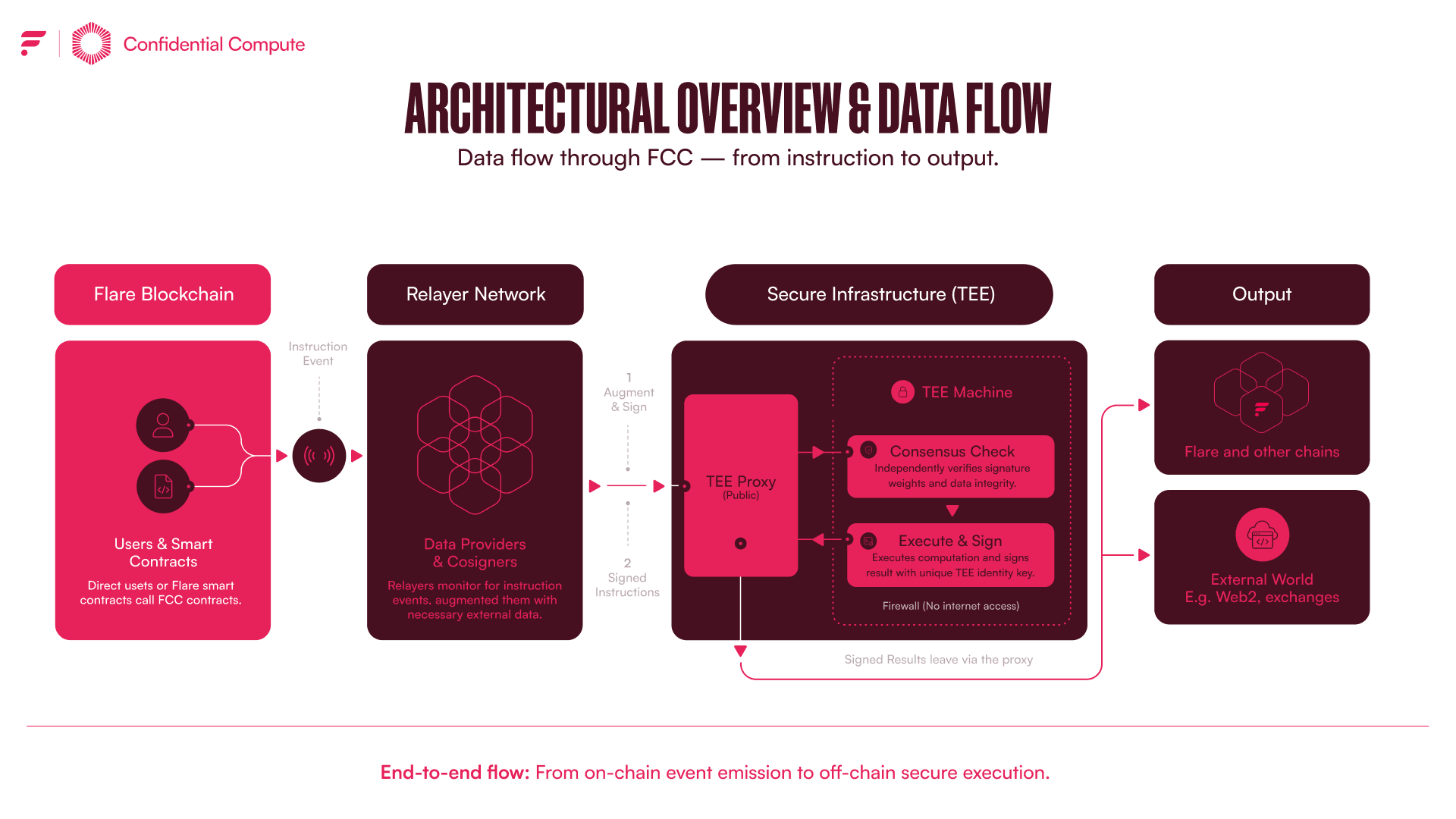
FSA treats XRPL as the control layer. When you sign an XRPL transaction, the memo field encodes what should happen on Flare: how much FXRP to mint, which vault to deposit into. Flare Data Connector (FDC) proves that transaction onto Flare. A proxy smart contract mapped to your XRPL address executes the instruction on the EVM side. One EVM account per XRPL address, controlled only by that address.
Authorization is proof-based, not signature-verification-based. Custody is non-custodial. No separate EVM key, no session-key delegation, no third party holding funds.
More vaults, more choice
FSA now connects to two FXRP yield vaults. Each runs a different strategy with a different risk profile. Users choose where their FXRP goes.
Monarq XRP Yield Vault**: **Monarq (majority-owned by FalconX) runs a multi-strategy vault across three structurally uncorrelated sleeves: options, basis and funding rate capture, and on-chain DeFi. The vault rebalances dynamically based on market regime, overweighting whichever sleeve offers the best risk-adjusted return at any given time.
Clearstar's Flare XRP Yield Vault** (NEW):** Clearstar runs a fully on-chain DeFi strategy, deploying FXRP across lending and supply protocols on Flare including Avant and Euler. Every position is verifiable on-chain in real time. Clearstar was the first vault built on Upshift for FXRP and has held over 33M FXRP in deposits.
These are actively managed strategies, not fixed-rate savings products. Returns move week to week. Some weeks beat the estimate, some don't. That is normal for any managed strategy.
Clearstar's vault is fully on-chain: every deployment transparent and verifiable. Monarq's vault blends on-chain and off-chain strategies, targeting managed, multi-strategy XRP yield. with a different risk and transparency profile. They serve different preferences. More vaults with varying strategies are coming.
More wallets
FSA now supports five wallet connections, expanding access well beyond the original integrations
- D'CENT: hardware-secured, live since May 2026
- Xaman (NEW): XRPL-native software wallet
- Joey Wallet (NEW): non-custodial XRPL gateway with in-wallet FSA integration
- Ledger (NEW): hardware wallet to access the FSA dApp via Ledger Live
- WalletConnect (NEW) — WalletConnect-compatible access including Bifrost via the FSA dAp
Any XRPL wallet that supports these connection methods can reach Flare's yield infrastructure directly.
Joey Wallet: FSA inside the wallet
Joey Wallet is embedding FSA as an in-wallet dApp. Their users can mint FXRP and deposit into vaults without leaving the wallet.
Joey is a self-custodial wallet built for XRPL. Onboarding takes under 3 seconds. Users choose between full self-custody or simplified social login via Web3Auth, secured by biometric and PIN authentication. No KYC, no personal data collection. With FSA inside Joey, that same low-friction experience now extends to Flare's DeFi.
"There's a lot of overlap between the XRPL and Flare communities, so integrating Flare Smart Accounts just made sense," said Christopher Troia, Co-Founder of Joey Wallet. "It brings a breath of fresh air for XRP holders, letting them start putting their XRP to work in a seamless way."
Start today
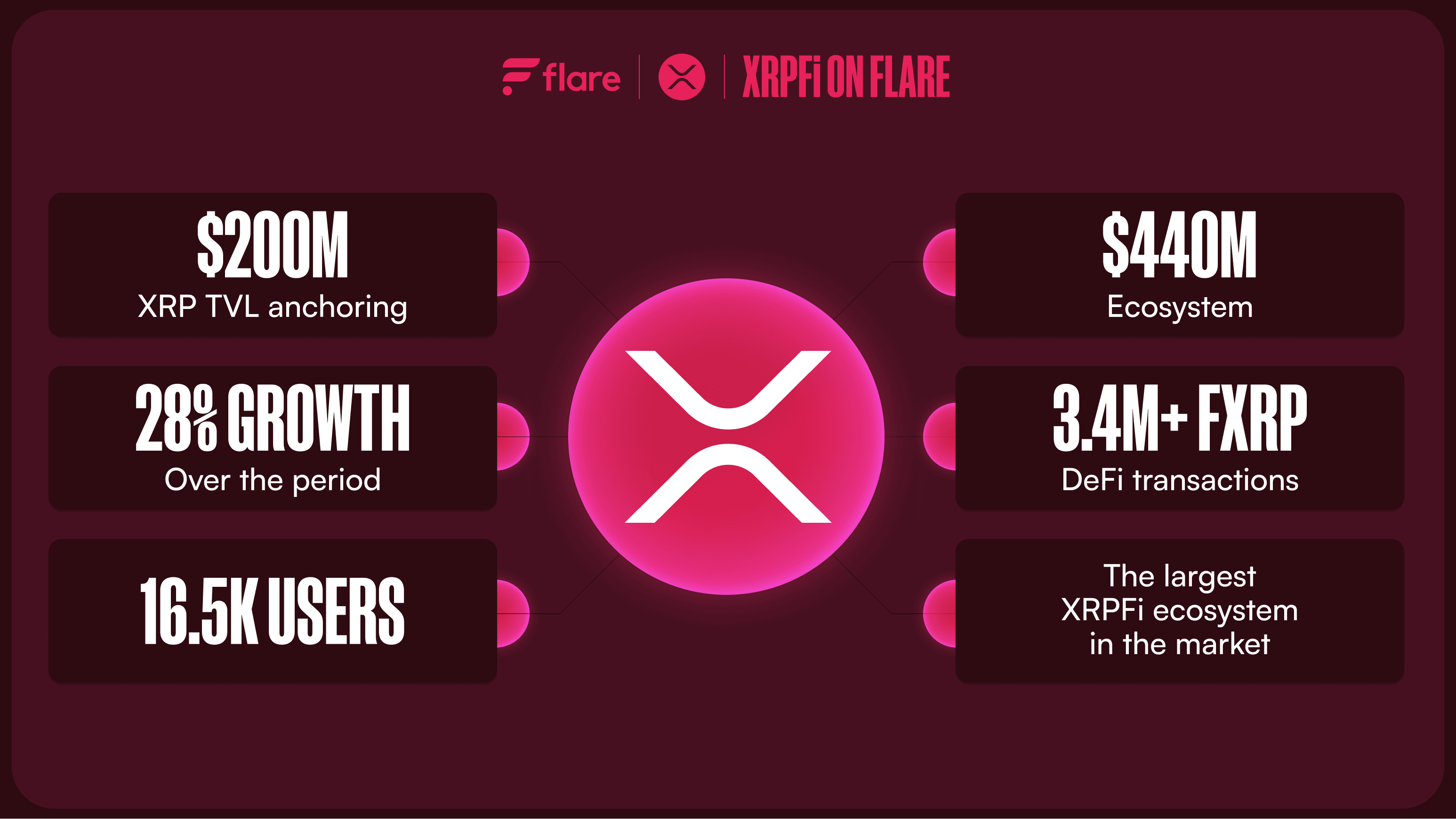
Since February 2026, FXRP in DeFi has grown nearly 75% (82M → 144M). More than 40M XRP is actively earning yield through Xaman and D'CENT. Nearly 24,000 smart accounts created. That was with two signatures and two vaults.
With v1.3, that same access now extends to Ledger, Bifrost, and Joey Wallet. More wallets, more vaults, one signature.
Start at fsa.flare.network, or through the in-wallet experience on Xaman, D'CENT, or Joey Wallet.
One signature. Non-custodial. XRPFi for all.
Why this matters
Practical context for the Flare ecosystem.
For users
XRP holders can access Flare yield vaults without an EVM wallet or gas tokens. One XRPL signature triggers automated FXRP minting and vault deposit. Two strategies with different risk profiles exist, but returns vary and are not guaranteed.
For builders
Wallet developers and vault operators can integrate via standardized connections. Joey Wallet demonstrates embedded in-wallet dApps. The proof-based flow relies on FDC and proxy contracts, abstracting EVM accounts while keeping custody non-custodial.
For the network
Update increases FDC utilization bridging XRPL to Flare. Rising FXRP in DeFi may grow on-chain activity. Infrastructure operators should monitor FDC proof throughput and proxy contract state growth as smart accounts increase.
FTSOBest analysis
What changed
Flare Smart Accounts (FSA) v1.3 compresses the XRPL-to-Flare yield workflow from two XRPL signatures to one. A user signs a single XRPL transaction encoding the desired FXRP mint and vault deposit; the system then handles execution on Flare automatically. The user’s XRP collateral remains on XRPL, and no separate EVM wallet or gas token is required from the user.
Technical mechanics
The architecture treats XRPL as the control layer. The XRPL transaction memo encodes intent: how much FXRP to mint and which vault to target. Flare Data Connector (FDC) attests that the XRPL transaction occurred. A proxy smart contract mapped one-to-one to the XRPL address receives the proven instruction and executes on Flare’s EVM. The source describes authorization as proof-based rather than direct EVM signature verification, and emphasizes non-custodial custody with no separate EVM key, session-key delegation, or third-party fund custody.
Vault options
Two FXRP yield vaults are currently available, with differing strategies and transparency profiles:
-
Monarq XRP Yield Vault: A multi-strategy vault with three sleeves—options, basis/funding rate capture, and on-chain DeFi. It rebalances dynamically based on market regime. Monarq is majority-owned by FalconX. Because it blends on-chain and off-chain strategies, not all positions are verifiable on-chain in real time.
-
Clearstar's Flare XRP Yield Vault: A fully on-chain DeFi strategy deploying FXRP across Flare lending and supply protocols including Avant and Euler. Positions are verifiable on-chain in real time. The source states it was the first FXRP vault built on Upshift and has held over 33M FXRP in deposits.
Both are actively managed; returns fluctuate and are not fixed-rate or guaranteed.
Wallet access
FSA v1.3 supports five connection methods:
- D'CENT: hardware wallet, live since May 2026
- Xaman: XRPL-native software wallet
- Joey Wallet: non-custodial XRPL gateway with in-wallet FSA integration
- Ledger: hardware wallet accessing the FSA dApp via Ledger Live
- WalletConnect: including Bifrost via the FSA dApp
Joey Wallet embeds FSA as an in-wallet dApp, allowing minting and deposit without leaving the wallet. Joey offers self-custody or Web3Auth social login secured by biometric/PIN, with no KYC or personal data collection per the source.
Reported metrics
Since February 2026, the source reports:
- FXRP in DeFi grew from 82M to 144M (nearly 75%)
- Over 40M XRP actively earning yield through Xaman and D'CENT
- Nearly 24,000 smart accounts created
These figures predate the v1.3 single-signature release and the addition of Ledger, Bifrost, and Joey Wallet support.
Dependencies and considerations
- FDC attestation: The flow depends on timely and accurate FDC proofs from XRPL to Flare. Any delay or failure in attestation would block execution.
- Proxy contract integrity: The one-to-one XRPL-to-EVM proxy mapping is a critical component; the source does not detail upgrade mechanisms or timelocks.
- Vault risk: Actively managed strategies carry variable returns and potential loss of principal. Monarq’s off-chain sleeves introduce additional counterparty and transparency considerations compared with Clearstar’s fully on-chain approach.
- Memo encoding: Execution correctness relies on precise parsing of the XRPL memo field; malformed memos could lead to incorrect mint or deposit behavior.
Ratings
Comments
Connect your wallet to leave a comment.